Governance & Control Architecture
Westwyrd is designed to eliminate unilateral control and enforce transparent, verifiable governance mechanisms.
Control Model
On-chain enforcement with role separation
- ■Role-based access control enforced on-chain — permissions are verified by smart contract logic, not application-level checks
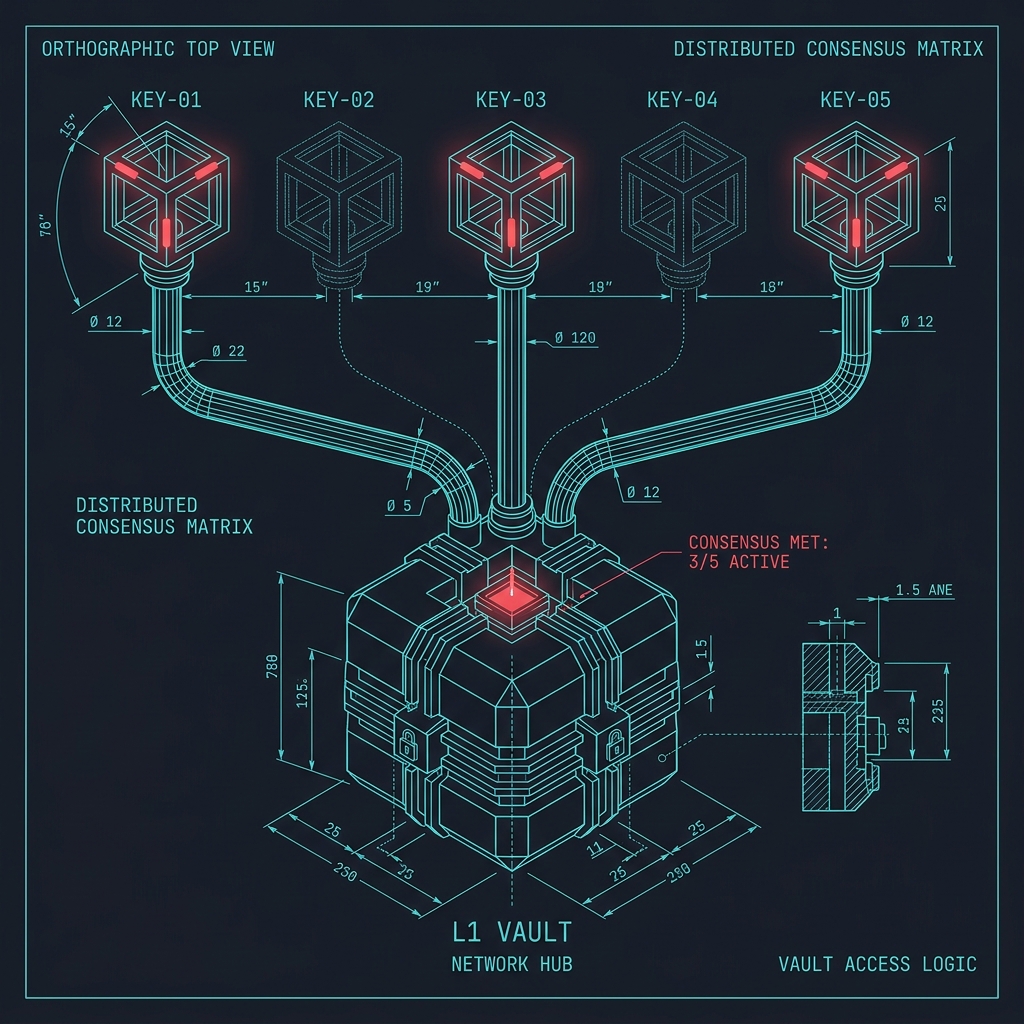
- ■Multisignature authorization for critical actions — no single key or actor can execute privileged operations
- ■Explicit role renunciation to remove privileged control — administrative capabilities are revoked after initial deployment
The governance model is designed to be self-constraining. Once roles are renounced, they cannot be re-acquired. This ensures that the protocol transitions from a managed deployment to an autonomous system with no residual administrative backdoors.
Operational Constraints
- ■Modify protocol logic without consensus
- ■Redirect funds or alter asset ownership records
- ■Override verification rules or bypass proof requirements
- ■Disable monitoring systems or suppress alerts
- ■Grant or escalate privileges without multi-party authorization
All governance actions are recorded and independently verifiable on-chain. The governance log provides a complete, tamper-evident audit trail of every administrative action taken since deployment.
Governance Transition
The protocol follows a progressive decentralization model. Initial deployment requires administrative control for parameter tuning and emergency response. As the system matures, administrative roles are systematically renounced until the protocol operates autonomously.
Each renunciation event is recorded on-chain and cannot be reversed. The transition timeline is publicly documented and verifiable.